
Social Media Management for Small Business Guide 2027
Wondering how to handle social media for your small business in 2027? Get plain answers on platforms, posting, ads, DMs, creator rules and monthly plans.
By Biz E-Agency Inc. TeamUpdated 17 min read
Quick answer: Good social media management for small business in 2027 means choosing one or two platforms, planning a month of content at a time, replying to comments and messages within a day, and reviewing a few simple numbers every month. You can do it yourself, hire someone, or use a monthly plan. No one can honestly promise followers or income.
You probably have a business to run, so let us keep this practical. Below, I answer the questions owners ask most, in plain language, with steps you can follow this week. It also covers creators who want to grow toward monetization, with honest notes on what platforms require and what nobody can promise.
What is social media management for small business?
It is the ongoing work of planning, creating, publishing, replying, advertising and reporting on your social accounts so they bring you customers.
Posting is only one part. Great videos do little if comments go unanswered, and paid ads waste money if the profile they point to looks neglected. Each part affects the others.
What does good social media management look like?
A healthy account has a few visible traits:
- A clear profile: name, photo, bio, link, and contact button all match your brand.
- A steady rhythm of posts that people can rely on.
- Replies to comments and messages within a day.
- A simple monthly report that shows what worked and what to change.
- Ads, when used, tied to a specific goal such as leads, bookings, or sales.
What can it not do?
It cannot guarantee a follower count, viral reach, or income. Algorithms change, audiences are unpredictable, and platforms set their own rules. A reliable provider commits to the work (posts, edits, replies, reports) and not to results they do not control.
Why does social media matter for your business in 2027?
Because customers check your profiles before they call, visit, or buy. An active, responsive profile tells them you are open for business.
A profile with no posts for four months raises doubts, even if your service is excellent. That is true today, and it is likely to stay true for 2027 and 2028, because people will keep searching for businesses on the apps they already use.
Think of your profile as a shop window that also answers questions. If it is tidy, current and quick to reply, it supports every other marketing effort you run.
Which social media platforms should your small business use?
Use the platforms where your buyers already spend time, and start with only one or two. Ask your last ten customers which apps they use, and look at where your competitors get real conversations, not just likes.
The most common mistake in social media management for small business is trying to be everywhere. Each platform needs its own formats, tone, and attention. Spreading a small team across six networks usually produces six weak profiles.
How do you match a platform to your customer?
| Platform | Strong fit for | Typical content |
|---|---|---|
| Retail, food, beauty, fitness, local services | Reels, photo carousels, Stories | |
| Local businesses, community groups, older audiences | Posts, events, Reels, Messenger replies | |
| TikTok | Products with visual appeal, personalities, creators | Short videos, trends, behind the scenes |
| YouTube | How-to content, reviews, long-term search traffic | Long videos and Shorts |
| B2B services, recruiting, professional advice | Text posts, documents, short video |
This table is a starting point. A plumber might do better on Facebook than TikTok, while a streetwear brand may do the opposite.
Why start with just two platforms?
Because depth beats breadth. Do one or two networks well for three months, then add a third only when your routine feels easy. If your resources are tight, a plan covering two platforms is enough to build a real presence.
Also claim your handle on the other major platforms, even if you do not use them yet. This protects your brand name and avoids copycat accounts.
How do you build a content plan step by step?
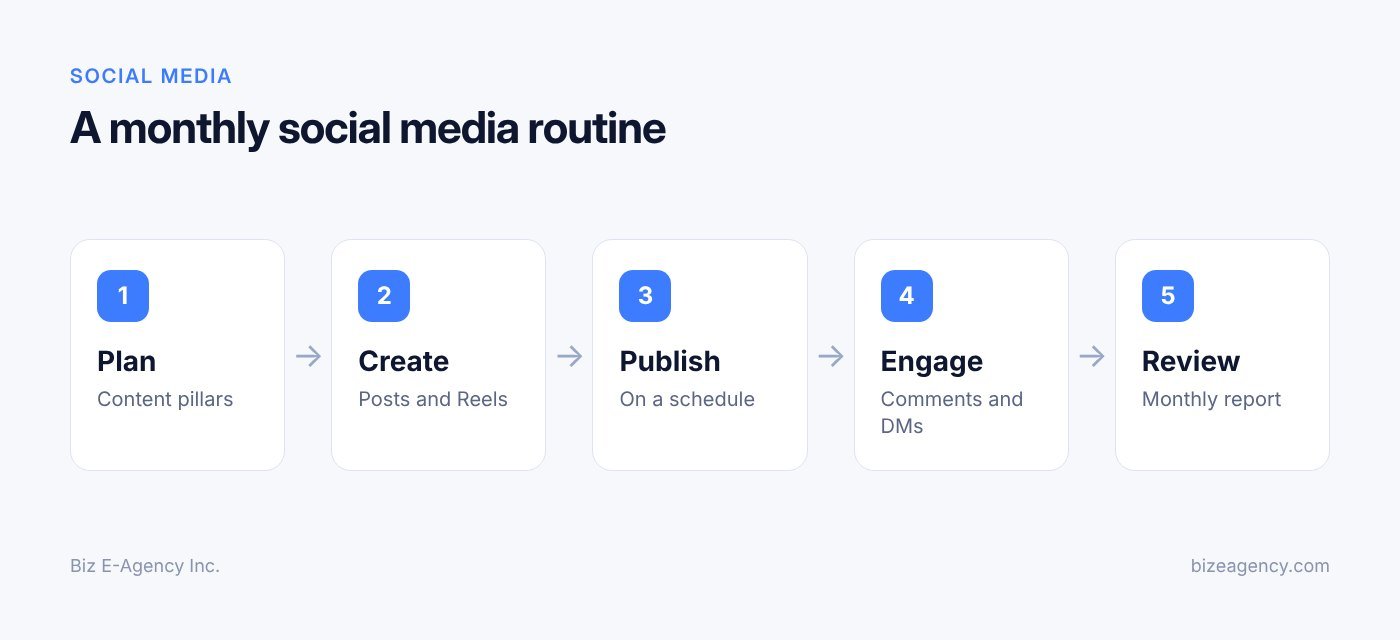
You build it in a short monthly cycle: review, list dates, assign themes, batch-create, schedule, and leave room for surprises. Here is the routine, which takes a few hours once a month.
- Review last month's results and pick what to repeat.
- List upcoming dates: sales, holidays, product launches, events.
- Assign one content pillar to each week.
- Write captions and shoot or design in one or two batches.
- Schedule posts using the platform's built-in scheduler or a scheduling tool.
- Leave room for two or three unplanned posts reacting to real events.
- Save your calendar and export your numbers, so next month starts with facts.
What are content pillars?
Pillars are three to five recurring themes that keep your message consistent. A local bakery might use these:
- Behind the scenes: bakers at work, ingredients, early mornings.
- Products: new items, seasonal specials, custom orders.
- Education: how to store bread, how to order a cake.
- Social proof: customer photos, reviews, event coverage.
- Community: local events, partners, team stories.
Rotate through the pillars so no single theme dominates. Promotional posts should be a minority. If every post says "buy now," people stop paying attention.
What should your calendar look like?
Keep it simple. Use a spreadsheet with columns for date, platform, pillar, format, caption, and status. You do not need paid software to start. A tool is only worth buying once the spreadsheet becomes a real bottleneck.
How often should you post?
There is no universal number. Consistency matters more than volume, and a pace you can sustain beats a burst followed by silence. The table below shows realistic starting points for a small team, not rules from the platforms.
| Platform | Realistic starting pace | Notes |
|---|---|---|
| 3 to 5 posts or Reels per week | Mix Reels with carousels | |
| 3 to 4 posts per week | Reply to Messenger and comments daily | |
| TikTok | 3 to 5 videos per week | Test several styles early on |
| YouTube | 1 long video per week or two, plus Shorts | Quality and clear titles matter most |
| 2 to 3 posts per week | Practical advice performs better than slogans |
If those numbers feel heavy, cut them in half. Twelve strong posts a month is a respectable output for a business with a small team. Raise the frequency only when you can keep quality high.
Do you really need Reels, Shorts and short video?
For most businesses, yes, at least as a test. Short vertical video is a main format on Instagram (Reels), YouTube (Shorts), Facebook (Reels), and TikTok, and you can expect it to stay important in 2027. You do not need a studio. A recent phone, natural light, and a clear idea are enough.
What video ideas work for most businesses?
- Show a process: how an order is packed, how a repair is done, how a dish is made.
- Answer one customer question in under 30 seconds.
- Compare two options and explain which is better for whom.
- Share a quick tip related to your trade.
- Introduce a team member and what they do.
- Show a before and after.
What is a basic structure for each video?
Open with the point in the first two seconds, using text on screen and a spoken line. Deliver one idea only. Close with a clear next step, such as "message us to book" or "link in bio." Add captions, because many people watch without sound.
Can you reuse one video on several platforms?
Often, yes. One video can serve Reels, Shorts, and TikTok with small edits. Remove watermarks from other apps before reposting, because some platforms reduce the reach of videos that carry another app's logo. Adjust the caption and hashtags for each network, and keep a library of raw clips so editing stays quick.
How do you edit without burning hours?
Set a fixed template: same font, same colors, same opening and ending. Use the built-in editors in each app first, and move to a desktop editor only if you need more control. Or hand editing to a specialist so your time goes to the business.
How should you handle comments and DMs?
Reply fast, reply like a person, and move serious buyers toward a clear next step. People who comment or message are warm leads, and slow replies cost sales.
How quickly should you reply?
Decide in advance. A reasonable target is within a few hours on business days and within 24 hours at the latest. Write a short internal guide covering:
- Tone of voice and words to avoid.
- Answers to the ten most common questions.
- When to move a chat to a phone call or email.
- How to handle complaints, with an escalation contact.
- What to do with spam and abusive comments.
How do you handle negative comments?
Reply to genuine comments with more than an emoji. For negative comments, respond politely, acknowledge the issue, and offer to continue privately. Do not delete honest criticism unless it breaks your rules or the platform's. Visible, calm replies often impress other readers more than the original post.
How do you turn DMs into sales?
Use saved replies for common questions, but personalize the opening line. Collect the details you need (name, product, date, location) in the first or second message.
If volume grows, a shared inbox and a CRM help you track every lead. See our guide to CRM software for small business for what to look for. If many customers prefer WhatsApp, our WhatsApp Business API guide explains how a verified business account and shared inbox can work alongside your social channels.
Do you have to disclose sponsored posts?
If you work with creators or receive free products in exchange for posts, disclosure matters. The US Federal Trade Commission explains that a material connection, such as payment or free products, should be disclosed clearly alongside the endorsement, using plain words like "ad" or "sponsored." See the FTC's Disclosures 101 for social media influencers. Other countries have similar rules, so check your local advertising regulator.
How do paid social ads work, and what do they cost?
Paid ads put your content in front of people who do not follow you yet. What they cost depends on your goal, audience size, location, competition, and creative quality, so no honest guide can quote a single price.
Organic reach alone is rarely enough for a new business, so paid campaigns belong in most plans. They work best when your organic profile is already solid.
Why is the ad budget separate from management fees?
Management fees and ad spend are different things. Ad budget is the money you pay the platform (Meta, TikTok, YouTube or Google) for impressions and clicks. Management covers the strategy, creative, setup, monitoring, and reporting.
Because platforms charge you directly, you keep full control of the spend and can see every dollar in your own ad account. At Biz E-Agency, ad budgets are paid directly to the platform and are not included in plan prices. Insist on the same clarity from any provider. You should own the ad account, and you should be able to see spend at any time.
How do you run your first campaign step by step?
Follow this path:
- Pick one goal: leads, messages, bookings, store visits, or sales.
- Choose one audience, such as people within 10 km of your shop or an interest group.
- Run two or three creative variations for at least a week.
- Set a daily budget you are comfortable losing while you learn.
- Install the platform pixel or conversion setup on your website, so you can see which ads lead to purchases or inquiries.
- Review results, pause the weak ads, and move budget to the strong ones.
What are the common paid campaign mistakes?
- Boosting posts without a clear goal or audience.
- Sending traffic to a slow or confusing page.
- Changing too many things at once, so you cannot tell what worked.
- Ignoring the messages that ads generate.
- Judging results after one day.
If your website needs improvement first, our web and software services cover custom websites and business systems that connect to your marketing.
Which numbers should you track?
Track a handful of metrics tied to business goals and review them monthly. Reports full of numbers can hide the truth, so keep yours short.
| Goal | Metric to track | Why it matters |
|---|---|---|
| Awareness | Reach, video views, profile visits | Shows whether new people see you |
| Engagement | Saves, shares, comments, watch time | Shows whether content is useful |
| Traffic | Link clicks, website sessions | Shows interest beyond the app |
| Leads | DMs, form fills, calls, bookings | Shows buying intent |
| Sales | Orders, revenue, cost per result | Connects work to money |
Followers are a weak measure on their own. A page with 2,000 local followers who buy can be worth more than a page with 50,000 who never respond.
How do you run a monthly review?
Once a month, answer five questions. Which three posts performed best, and why? Which performed worst? Which platform brought the most leads? What did ads cost per result? What will we do differently next month?
Write the answers down. Over a few months you will see patterns that no guide can give you.
Do you need paid analytics tools?
Not at first. Instagram, Facebook, TikTok, and YouTube all offer free analytics inside the app. Learn these before paying for extra tools, and export or screenshot the numbers each month so you keep a history.
What do you need to monetize as a creator?
Each platform sets its own thresholds, and they change over time. Always check the official pages before planning around any number. Monetization is often the goal for creators, whether for a personal brand or a business channel.
What are the YouTube Partner Program requirements?
YouTube publishes clear criteria. According to YouTube's help page on the YouTube Partner Program, a channel needs at least 1,000 subscribers, plus either 4,000 valid public watch hours in the last 12 months or 10 million valid public Shorts views in the last 90 days. The channel must follow the monetization policies and have no active Community Guidelines strikes.
Review YouTube's policies overview, which covers the Community Guidelines, advertiser-friendly guidelines, and the appeals process.
What about Meta and TikTok programs?
Facebook, Instagram, and TikTok run creator programs with their own eligibility rules, such as follower counts, content originality, age, region, and policy compliance. Availability differs by country, and programs are updated or renamed from time to time. Check each platform's official creator help pages for the current terms before you commit time or money to a plan built around them.
How do you get ready before you qualify?
- Post original content, not reposts of other people's work.
- Keep a clean record with no policy strikes or copyright claims.
- Set up your business details, payment profile, and any required verification.
- Diversify income: sponsorships, affiliate links, products, memberships, and services.
- Track watch time and audience retention, since these drive long-term growth.
Remember that eligibility is not income. Meeting a threshold only lets you apply. Earnings depend on views, audience location, content category, and advertiser demand.
Is it safe to buy followers or views?
No. Buying followers, likes, or views looks like a quick win, but it usually backfires, and ethical management avoids it.
Why does fake growth hurt?
- Fake accounts do not watch, comment, or buy, so engagement rates fall.
- Platforms can remove fake accounts, which makes your numbers drop later.
- Inflated numbers can break monetization checks, which look at valid, genuine activity.
- Brands that partner with creators often audit audiences and drop those with suspicious patterns.
- Some platforms penalize accounts for artificial engagement, including restrictions or removal.
What are the warning signs of a bad provider?
Be cautious if a provider promises a specific number of followers by a date, offers cheap packages of likes or views, asks for your password, or refuses to show real work. Genuine growth is slower and less predictable, but it produces people who care.
How do you grow a real audience instead?
Real growth comes from useful content, consistent posting, collaborations with accounts your audience already follows, clear calls to action, and sometimes paid reach to real people. Ask existing customers to follow and tag you. Feature customer content with permission. Join local groups and respond to conversations.
Should you do it yourself, hire in-house, or use an agency?
It depends on your stage. Start yourself if you have more time than money, hire in-house when social drives real revenue, and choose an agency or monthly plan when you need steady output without recruiting.
| Option | Strengths | Weaknesses |
|---|---|---|
| Do it yourself | Lowest cost, full control, authentic voice | Time-consuming, easy to drop when busy |
| Hire in-house | Deep brand knowledge, always available | Salary, tools, training, single point of failure |
| Agency or monthly plan | Team skills, predictable cost, reporting | Less daily presence, needs good briefing |
When does doing it yourself make sense?
When you are just starting. Handle it yourself for a few months. You will learn what your customers ask and what they respond to, and you can use that knowledge later to brief anyone you hire.
When should you hire in-house?
Once social media drives a meaningful share of revenue and you need daily presence, quick reactions, and tight links with sales or customer service. Budget for the person plus a camera, editing software, and scheduling tools.
How do you choose an agency?
An agency or monthly plan gives you strategy, design, video editing, ad setup, and reporting for a fixed monthly fee. Ask these questions before signing:
- What exactly is included each month: posts, Reels, platforms, replies, reports?
- Who owns the accounts, content, and ad accounts?
- Can I cancel any time, or am I locked in?
- How is ad spend handled?
- How will you report results, and how often?
- Do you promise follower counts or income? (If yes, walk away.)
You can learn about our approach on the social media management page, and about the company on our About page.
What does a monthly social media plan include?
Plans differ between providers, so compare line by line. Here is what Biz E-Agency offers, billed monthly with no long contract. You can cancel any time, and ad budgets are paid separately to the platform.
| Plan | Price per month | What is included |
|---|---|---|
| Starter | $30 | 2 platforms, 12 posts or Reels per month |
| Growth | $60 | 4 platforms, 30 posts or Reels per month, paid ad campaigns managed, daily comment and DM replies |
| Creator Pro | $100 | YouTube, TikTok, Facebook and Instagram, video editing, a monetization readiness plan, weekly strategy call |
Which plan fits which business?
- Starter suits a new business that needs a tidy, active presence on two platforms.
- Growth suits a business that wants near-daily posting, active community replies, and managed ads.
- Creator Pro suits creators building toward platform monetization who need editing support and regular strategy sessions.
No plan guarantees follower numbers or earnings. The plans cover the work: planning, content, publishing, replies, and for the higher tiers, ads and strategy. Results depend on your market, offer, content quality, and platform changes. For full details, see social media management plans.
What should you ask before choosing a plan in 2027?
Check how many revisions you get, how approvals work, whether you can supply your own photos and clips, and how quickly the team replies to questions. Share brand guidelines, product details, and common customer questions at the start so content matches your voice from week one.
How do you connect social media to the rest of your business?
Social leads are only valuable if you follow them up. Many businesses connect their channels to a business CRM so every inquiry is tracked, or add automation through AI and automation tools to handle repetitive questions. Our team builds these systems as well, so your marketing and operations can share one set of records.
What will change in 2027 and 2028?
Nobody can predict this precisely, so treat the points below as things to watch, not facts. Platforms update features, rules and creator programs often, and you should expect that to continue.
What trends are likely to matter?
- Short video will likely remain a main format, so a simple filming routine should stay useful.
- Expect more built-in tools for editing and captions, which may lower the cost of making content.
- Watch for changes in creator program rules, including eligibility thresholds. Check official pages before you plan around any number.
- Expect continued attention on disclosure, authenticity and fake engagement, so honest practices are a safer bet.
- Messaging is likely to matter more for sales, so fast replies and a shared inbox should pay off.
How do you future-proof your plan?
Build habits instead of tricks. A clear brand, a steady rhythm, quick replies and a monthly review keep working when features change. Own your accounts and ad accounts, keep your customer data in a CRM you control, and review your platform choices once or twice a year.
Next steps
You do not need a huge budget to run good social media management for small business. You need a clear plan, a realistic pace, quick replies, and honest measurement.
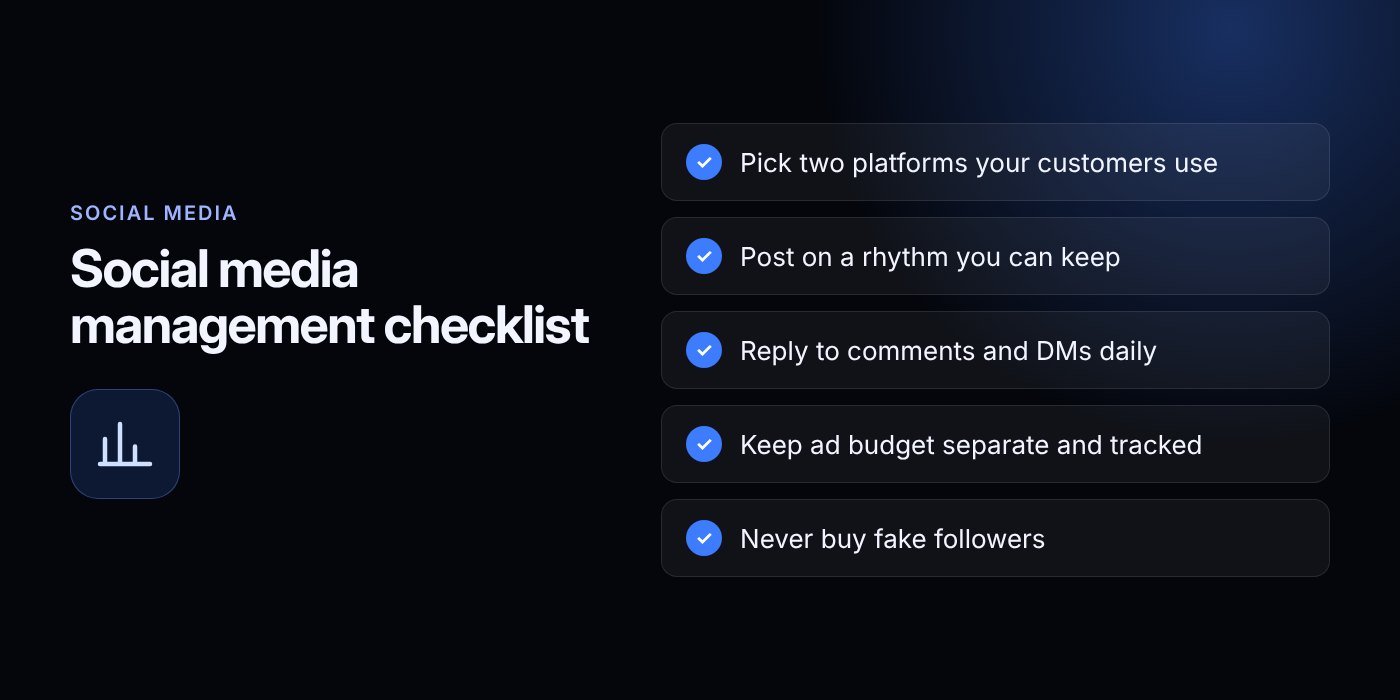
Use this checklist to get started this week:
- Choose one or two platforms where your customers already are.
- Define three to five content pillars.
- Build a one-month calendar and batch your first videos.
- Set a reply standard for comments and DMs.
- Decide on a small test budget for paid ads, kept separate from fees.
- Pick five metrics and review them monthly.
- Check official creator pages before planning for monetization.
If you would rather hand this to a team, contact Biz E-Agency and tell us your goals, platforms, and budget. We will recommend a plan in writing, with no pressure and no promises we cannot keep. You can also browse our projects to see the kind of work we deliver.
Frequently asked questions
What does it cost to hire someone to run my social accounts?
Costs vary by provider and scope. Biz E-Agency monthly plans are $30 for Starter, $60 for Growth and $100 for Creator Pro, and you can cancel any time. Ad budgets are separate and paid directly to the platform.
How many times a week should I post?
Three to five posts or Reels per week on each active platform is a realistic starting point. Consistency matters more than volume, so choose a pace you can keep for months. Twelve strong posts a month is still a solid start.
Do I need to be on every app?
No. Most small businesses do well starting with two, such as Instagram and Facebook, then adding more once the routine is stable. Ask recent customers which apps they use and start there.
Is the ad budget included in a management fee?
No. Ad spend is paid to the platform (Meta, TikTok, YouTube or Google) and is separate from management fees. You should own the ad account and be able to see spend at any time.
When can I start earning money from a YouTube channel?
YouTube lists 1,000 subscribers plus either 4,000 valid public watch hours in the last 12 months or 10 million valid public Shorts views in the last 90 days. You must also follow monetization policies and have no active Community Guidelines strikes. Check YouTube's help page for current terms.
Will buying followers help my page grow?
No. Fake followers do not engage or buy, can be removed by platforms, and may put monetization eligibility and brand partnerships at risk. Real growth from useful content is slower but more valuable.
Need help putting this into practice?
Tell us what is slowing your business down. We reply within one business day with a clear fix.